
There are two pictures in this one, sharing an edge.
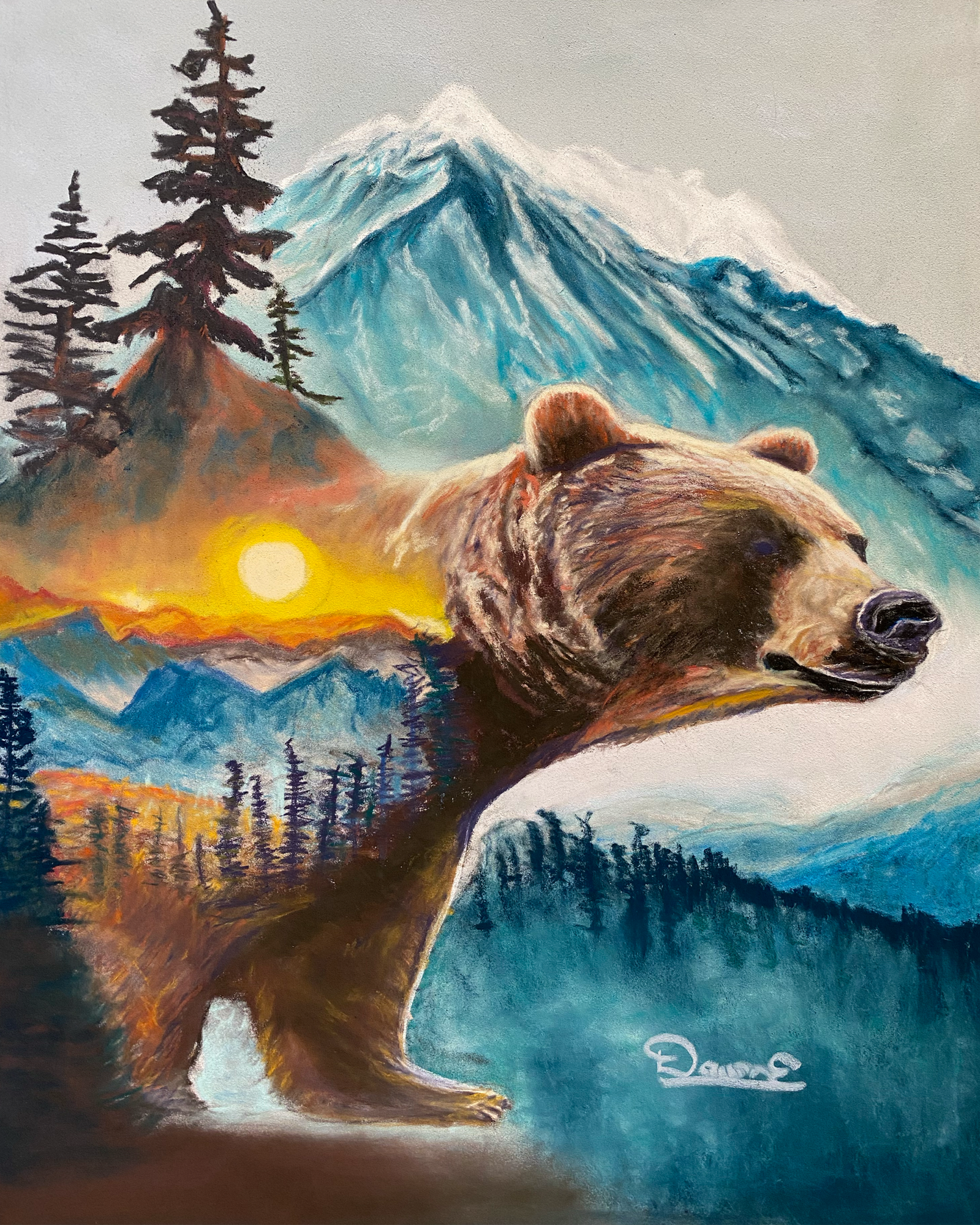
The outline is a grizzly, walking left to right, head turned slightly out towards you. Inside that outline is a valley: a snow-capped peak, ranks of dark pines, a sun sitting low and gold over blue ridges, and water going deep teal along the bottom edge.
The bear is not standing in the landscape. The bear is made of it.
Why this works in pastel and not much else
A picture like this lives or dies on the transitions. If the edge where the bear becomes the mountain is hard, the whole thing looks like a cut-out, and the idea collapses into a trick.
Pastel handles that edge better than almost anything, because you can lay a colour down and then soften it with a fingertip until it is no longer clear where one thing stopped. The bear shoulder goes into snow. The line of the back becomes a ridge. There is a point along the front leg where I could not tell you which of the two you are looking at, and that is the point of it.
The sun is the anchor
That low gold sun is small, and it is the reason the rest holds together. Everything cool in the painting, and most of it is cool, is measured against that one warm spot. Cover it with your thumb and the whole picture goes cold and a bit sad.
It also sets the hour. This is late light, near enough to the end of the day that the ridges have gone blue and the water has gone dark, but the peak is still catching the last of it.
What it is like on a wall
At 11.5 × 15 this is one of the larger pieces, and it earns the room. It reads from across a space as a bear, and then you walk towards it and it turns into a valley, which is a good thing for a painting to do in a hallway or a room people move through.
It suits a plain wall. Anything patterned behind it will argue with the pine texture.
One original, as always. The original is here and the print is here.
More in the gallery. If you want to know why the soft edges in this one behave the way they do, that is the medium.
— DawnE