Soft pastel is, more than anything else, pigment. That is very nearly all of it. A stick of soft pastel is the same coloured powder that goes into paint, held together with just enough binder to keep it in the shape of a stick. No oil. No acrylic medium. Nothing varnished over the top.
That one fact explains most of what you see in these paintings.
The light reaches bare pigment
When you stand in front of a pastel painting, the light coming back to your eye has bounced off the pigment itself. There is no layer of oil or resin between the two. Colour under a glaze is colour seen through something. Colour in pastel is not seen through anything.
That is why these paintings read the way they do in a room. Not louder, exactly. Closer.
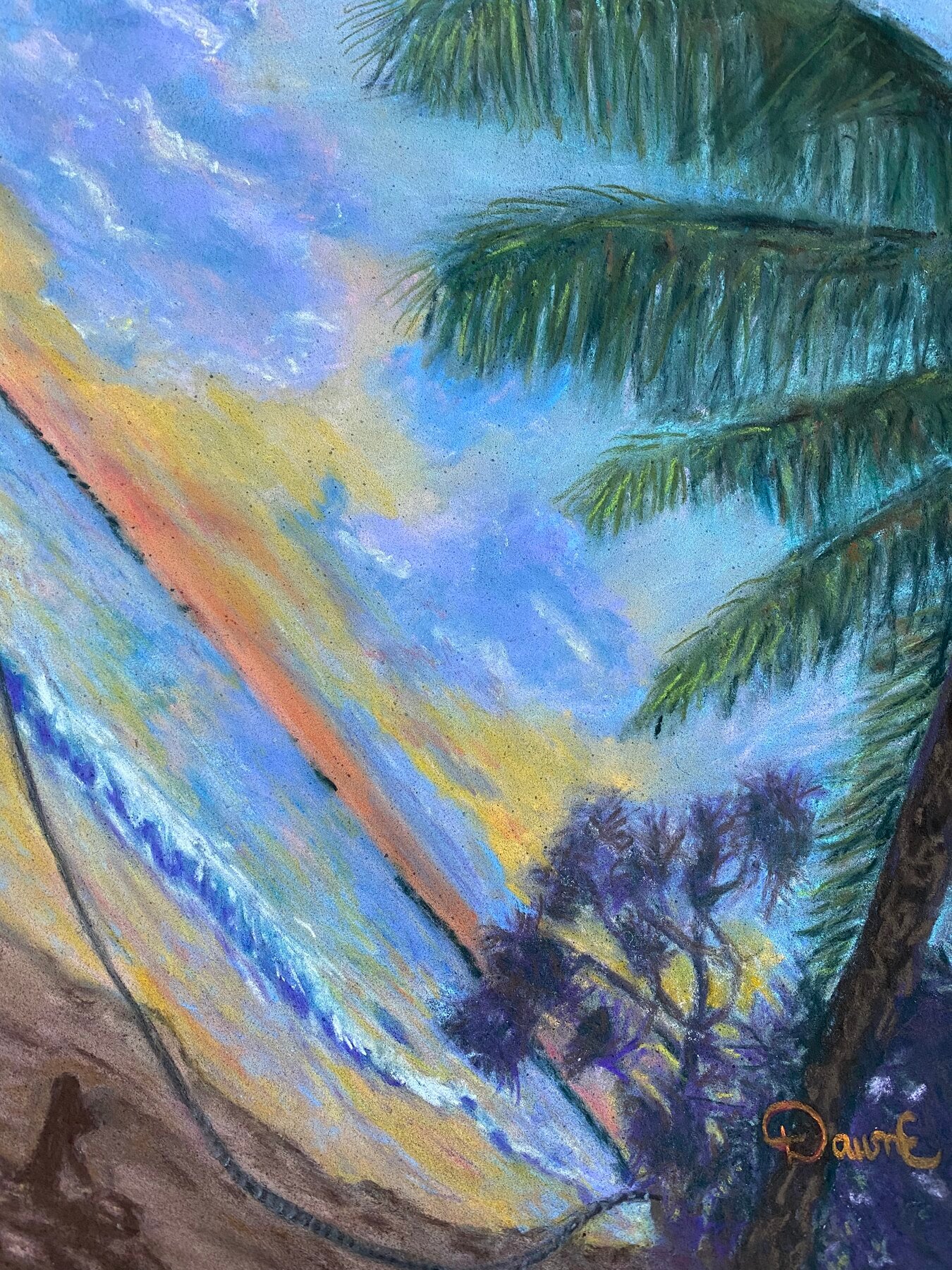
Look at the water in that one. The turquoise is not a single colour. It is four or five laid side by side, and your eye does the mixing rather than the palette doing it. Pastel is unusually good at this, because two colours can sit next to each other without turning to mud the way wet paint does.
The paper has a budget
Pastel paper is not smooth. It has tooth, a fine grit that catches the powder and holds on to it. Every stroke fills a little more of that tooth. You can work light over dark and dark over light, but only so many times before the surface is full and simply will not take any more.
So a painting has a budget, and you spend it as you go. Knowing roughly how much is left changes what you are willing to try.
There is no undo
This is the part that surprises people most. A little pastel can be lifted with a soft brush and some can be knocked back, but you cannot paint over a mistake the way you can in oil. The mark you made is down in the tooth of the paper. The next mark sits on top of it, and what is underneath shows through whether you want it to or not.
Every mark commits. That is a limitation, and I would not pretend otherwise. It is also the reason a pastel painting holds the energy it holds. There is no laboured, reworked, painted-over surface dulling it down. What you are looking at is a set of decisions that were each made once.
Why it suits these subjects
Water, sky, rust, weathered wood, the fur along an animal back. All of these are soft-edged things with a great deal of colour sitting inside other colour. Pastel does that naturally, blending under a finger or a stump without going grey.
If you would like to see more of it, the whole collection is in the gallery. Later this month I will walk through how a commission actually works, start to finish.
— DawnE